








Face-to-face Course
November 23 to 26, 2026
Executive Summary
This intensive 32-hour training program equips geoscientists and reservoir engineers with practical skills to leverage Artificial Intelligence and Machine Learning techniques for upstream oil and gas applications. The course emphasizes business value, hands-on exercises, and real-world case studies from major operators.
Learning Objectives
Upon completion of this course, participants will be able to:
• Understand and apply core ML, Deep Learning, and Reinforcement Learning algorithms to reservoir engineering problems
• Design and implement AI-powered data preparation workflows for heterogeneous upstream datasets
• Build predictive models for production forecasting, decline curve analysis, and well performance
• Apply computer vision and deep learning to seismic interpretation and facies classification
• Develop AI-enhanced petrophysical analysis and log interpretation workflows
• Quantify and communicate business value of AI projects to stakeholders
• Deploy ML models in production environments with proper MLOps practices
• Navigate ethical considerations and governance frameworks for AI in the energy sector
DAY 01
Foundations: AI/ML Algorithms & Data Preparation
Introduction to Machine Learning, Deep Learning, and Reinforcement Learning for Upstream Applications
Day 1 Learning Objectives
- Understand the fundamental differences between ML, DL, and RL paradigms
- Identify appropriate algorithms for common reservoir engineering problems
- Master data preparation workflows for heterogeneous upstream datasets
- Apply feature engineering techniques specific to petrophysical and production data
- Evaluate model quality and recognize common pitfalls in geoscience ML
Morning Session 1: Introduction to AI/ML in Reservoir Engineering
Module 1.1: The AI Landscape for Geoscientists (45 min)
This foundational module establishes the business context and technical foundations:
- Why AI Now? – Convergence of data availability, computing power, and algorithm maturity
- AI vs. Traditional Methods – When to use ML vs. physics-based reservoir simulation
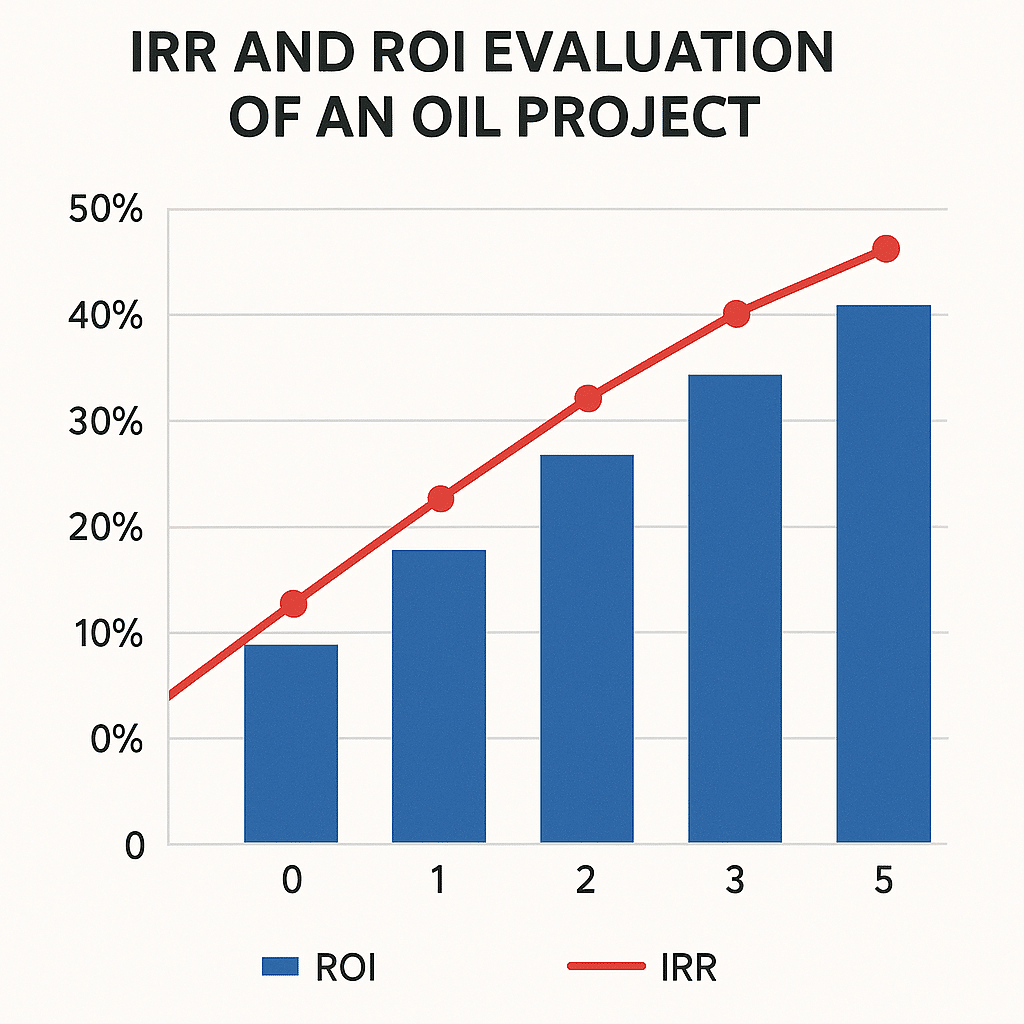
- The Business Case – ROI examples from digital oilfield implementations
- AI Project Lifecycle – From problem framing to deployment and monitoring
- Common Failure Modes – Why 85% of AI projects fail and how to avoid pitfalls
Module 1.2: Machine Learning Fundamentals (75 min)
Comprehensive overview of supervised and unsupervised learning algorithms:
Supervised Learning Algorithms:
- Linear Regression – Predicting continuous targets (e.g., porosity from logs)
- Logistic Regression – Binary classification (e.g., pay/non-pay identification)
- Decision Trees & Random Forests – Ensemble methods for robust predictions
- Gradient Boosting (XGBoost, LightGBM) – State-of-the-art tabular data performance
- Support Vector Machines – Margin-based classification for complex boundaries
- k-Nearest Neighbors – Instance-based learning for similarity-driven problems
Unsupervised Learning Algorithms:
- K-Means Clustering – Grouping wells or rock types by similarity
- Hierarchical Clustering – Dendrogram-based analysis for facies relationships
- DBSCAN – Density-based clustering for outlier detection
- Principal Component Analysis (PCA) – Dimensionality reduction for multi-log analysis
- t-SNE & UMAP – Visualization of high-dimensional petrophysical data
- Gaussian Mixture Models – Probabilistic clustering for reservoir zonation
Demo 1.1: ML Algorithm Comparison Dashboard (30 min)
Interactive Streamlit application demonstrating:
- Side-by-side comparison of algorithm performance on synthetic well data
- Hyperparameter tuning visualization
- Cross-validation and learning curves
- Feature importance analysis using SHAP values
Morning Session 2: Deep Learning & Reinforcement Learning
Module 1.3: Deep Learning Architectures (60 min)
Neural network architectures relevant to reservoir engineering:
Feedforward Neural Networks (FNN):
- Architecture: Input → Hidden Layers → Output
- Activation functions: ReLU, Sigmoid, Tanh, Softmax
- Applications: Log prediction, PVT property estimation, production forecasting
Convolutional Neural Networks (CNN):
- Architecture: Convolution → Pooling → Fully Connected
- 1D CNNs for log curve pattern recognition
- 2D CNNs for seismic facies classification
- 3D CNNs for volumetric reservoir property prediction
Recurrent Neural Networks (RNN, LSTM, GRU):
- Sequential data processing for time-series analysis
- LSTM architecture: Forget gate, Input gate, Output gate
- Applications: Production decline prediction, pressure transient analysis
Transformer Networks & Attention Mechanisms:
- Self-attention for capturing long-range dependencies
- Applications: Well log sequence analysis, natural language processing for drilling reports
Autoencoders & Variational Autoencoders:
- Dimensionality reduction and anomaly detection
- Generative models for synthetic data augmentation
Module 1.4: Reinforcement Learning for Optimization (45 min)
Introduction to sequential decision-making algorithms:
RL Fundamentals:
- Agent-Environment interaction model
- States, Actions, Rewards, Policy
- Exploration vs. Exploitation trade-off
- Value Functions and Q-Learning
Key RL Algorithms:
- Q-Learning – Tabular method for discrete action spaces
- Deep Q-Networks (DQN) – Neural network function approximation
- Policy Gradient Methods – Direct policy optimization
- Actor-Critic (A2C, A3C) – Combined value and policy learning
- Proximal Policy Optimization (PPO) – Stable training for complex environments
Reservoir Engineering Applications:
- Well placement optimization
- Injection rate optimization for EOR
- Drilling parameter optimization
- Production choke management
Demo 1.2: RL for Well Placement Optimization (15 min)
Visualization of an RL agent learning optimal well locations in a 2D reservoir model.
Exercise 1.1: Algorithm Selection Workshop (30 min)
Participants work in groups to match algorithms to reservoir engineering problems:
- Problem cards describing real upstream challenges
- Algorithm cards with pros/cons and typical use cases
- Group presentations defending algorithm choices
Afternoon Session 1: Data Preparation Workflows
Module 1.5: The Data Challenge in Upstream (30 min)
Understanding the unique characteristics of reservoir engineering data:
- Data Heterogeneity – Integrating logs, core, seismic, production, and drilling data
- Spatial and Temporal Scales – From nanopores to basin scale, microseconds to decades
- Data Quality Issues – Missing values, outliers, calibration drift, depth misalignment
- Data Silos – Breaking down barriers between petrophysics, geology, and engineering
Module 1.6: AI-Powered Data Preparation (60 min)
Modern techniques for cleaning and preparing upstream data:
Missing Data Imputation:
- Statistical methods: Mean, median, mode, interpolation
- Model-based: k-NN imputation, regression imputation
- Deep Learning: Autoencoders for multivariate imputation
- Multiple Imputation for uncertainty quantification
Outlier Detection & Handling:
- Statistical: Z-score, IQR, Mahalanobis distance
- Machine Learning: Isolation Forest, One-Class SVM, LOF
- Deep Learning: Autoencoder reconstruction error
- Domain-specific: Physics-based bounds checking
Feature Engineering for Geoscience:
- Log derivatives and ratios (e.g., Neutron-Density crossplot features)
- Sliding window statistics for trend capture
- Depth-normalized features
- Lithology indicators and cutoffs
- Automated feature generation with Featuretools
Data Normalization & Scaling:
- Min-Max scaling, Standard scaling, Robust scaling
- Log transforms for skewed distributions
- Well-by-well vs. global normalization strategies
Demo 1.3: Automated Data Preparation Pipeline (30 min)
Streamlit application demonstrating:
- Automated data quality assessment
- Interactive outlier detection and handling
- Missing value imputation comparison
- Feature engineering automation
Afternoon Session 2: Hands-On Data Preparation
Exercise 1.2: Building a Data Preparation Pipeline (60 min)
Participants build an end-to-end data preparation workflow:
- Load a messy well log dataset (provided)
- Identify and document data quality issues
- Apply appropriate cleaning techniques
- Engineer relevant features
- Prepare train/validation/test splits
- Document the pipeline for reproducibility
Case Study 1.1: Shell’s AI Data Platform (30 min)
Analysis of Shell’s approach to managing upstream data for AI:
- Centralized data lake architecture
- Automated data quality monitoring
- Metadata management and data lineage
- Self-service analytics for geoscientists
- Business impact: 30% reduction in data preparation time
Day 1 Quiz Topics
The 15-question quiz will cover:
- Supervised vs. unsupervised learning distinctions
- Algorithm selection criteria for reservoir problems
- Deep learning architecture identification
- Reinforcement learning concepts
- Data quality assessment techniques
- Missing data imputation methods
- Outlier detection algorithms
- Feature engineering best practices
- Data normalization strategies
- Cross-validation and overfitting prevention
DAY 02
Production Optimization & Forecasting
AI-Driven Production Analysis, Decline Curve Modeling, and Real-Time Optimization
Day 2 Learning Objectives
- Build ML models for production rate forecasting and decline curve analysis
- Apply time-series techniques (LSTM, Prophet) to production data
- Develop Virtual Flow Metering (VFM) solutions using neural networks
- Implement real-time production optimization strategies
- Quantify uncertainty in production forecasts using probabilistic methods
Morning Session 1: Production Forecasting Fundamentals
Module 2.1: Traditional vs. AI Decline Curve Analysis (45 min)
Evolution from Arps to machine learning approaches:
- Traditional Arps Decline: Exponential, Hyperbolic, Harmonic models
- Extended Decline Models: Modified Hyperbolic, Duong, Power Law
- Limitations of analytical models for unconventional reservoirs
- ML advantages: Pattern recognition, multi-well learning, uncertainty quantification
Module 2.2: Machine Learning for Decline Curve Analysis (60 min)
Modern AI approaches to production forecasting:
Feature Engineering for Production Data:
- Time-based features: Days on production, cumulative production
- Completion parameters: Lateral length, proppant intensity, fluid volume
- Reservoir properties: Porosity, permeability, pressure, saturation
- Operational factors: Choke settings, artificial lift parameters
Model Architectures:
- Gradient Boosting (XGBoost) for multi-well type curve prediction
- LSTM networks for sequential production forecasting
- Transformer models for long-horizon predictions
- Physics-Informed Neural Networks (PINNs) incorporating material balance
Demo 2.1: AI Decline Curve Analysis Tool (30 min)
Streamlit application featuring:
- Comparison of Arps vs. ML decline forecasts
- Automated type curve generation
- EUR estimation with uncertainty bounds
- Multi-well portfolio forecasting
Exercise 2.1: Building an LSTM Production Forecaster (45 min)
Guided exercise to build a production forecast model:
- Load and preprocess historical production data
- Create sequences for LSTM input
- Train and validate the model
- Generate 12-month forecasts with confidence intervals
Morning Session 2: Virtual Flow Metering & Real-Time Optimization
Module 2.3: AI-Based Virtual Flow Metering (45 min)
Using neural networks to estimate multiphase flow rates:
- VFM fundamentals: Why measure flow? Cost of physical meters
- Input data: Wellhead pressure, temperature, choke position, SCADA data
- Neural network architectures for VFM (FNN, LSTM)
- Handling multiphase flow: Oil, gas, and water rate estimation
- Model calibration with well tests
- Business case: $1-3M savings per platform from meter reduction
Demo 2.2: Virtual Flow Meter Dashboard (20 min)
Real-time VFM simulation showing:
- Comparison with test separator measurements
- Uncertainty visualization
- Drift detection and recalibration triggers
Module 2.4: Real-Time Production Optimization (45 min)
AI systems for optimizing production in real-time:
- Digital Twin concept: Physics + Data-Driven hybrid models
- Optimization objectives: Maximize production, minimize GOR, extend equipment life
- Constraint handling: Facility capacity, regulatory limits, equipment ratings
- Reinforcement Learning for choke optimization
- Model Predictive Control (MPC) with ML models
Afternoon Session 1: Time-Series Analysis & Anomaly Detection
Module 2.5: Advanced Time-Series Techniques (60 min)
Specialized methods for production time-series:
Classical Time-Series Analysis:
- Trend, Seasonality, and Residual decomposition
- ARIMA and SARIMA models
- Exponential smoothing (Holt-Winters)
Modern ML Approaches:
- Facebook Prophet for interpretable forecasting
- Temporal Convolutional Networks (TCN)
- Temporal Fusion Transformers (TFT)
- N-BEATS for pure neural network forecasting
Module 2.6: Anomaly Detection in Production Data (45 min)
Identifying production anomalies and equipment issues:
- Statistical methods: Control charts, CUSUM
- ML methods: Isolation Forest, One-Class SVM
- Deep Learning: Autoencoder reconstruction error, LSTM prediction error
- Applications: Leak detection, well interference, equipment failure prediction
Demo 2.3: Production Anomaly Detection System (15 min)
Real-time anomaly detection dashboard showing:
- Multiple detection algorithms running in parallel
- Alert prioritization and root cause suggestions
- Historical anomaly review and false positive management
Afternoon Session 2: Case Studies & Practical Applications
Case Study 2.1: Equinor’s AI Production Optimization (30 min)
Deep dive into Equinor’s Omnia platform:
- Real-time data integration from 30+ platforms
- ML-based production forecasting and optimization
- $50M+ annual value from production optimization
- Lessons learned and implementation challenges
Case Study 2.2: Unconventional DCA with Machine Learning (30 min)
Analysis of ML applications in Permian Basin:
- Multi-well type curves from completion and reservoir data
- Uncertainty quantification using ensemble methods
- Integration with reservoir simulation
- 15% improvement in EUR estimation accuracy
Exercise 2.2: End-to-End Production Analytics Project (45 min)
Capstone exercise integrating Day 2 concepts:
- Load multi-well production dataset
- Implement anomaly detection
- Build forecasting model (choice of method)
- Create executive dashboard with key metrics
- Present findings and business recommendations
Day 2 Quiz Topics
The 15-question quiz will cover:
- Decline curve analysis fundamentals
- LSTM architecture for time-series
- Virtual Flow Metering principles
- Production optimization constraints
- Time-series decomposition
- Prophet model components
- Anomaly detection algorithms
- Uncertainty quantification methods
- Real-time optimization concepts
- Business value quantification
DAY 03
Reservoir Characterization & Seismic AI
Deep Learning for Petrophysics, Seismic Interpretation, and Facies Classification
Day 3 Learning Objectives
- Apply deep learning to well log interpretation and lithology prediction
- Implement CNN-based seismic facies classification
- Develop AI models for porosity and permeability prediction
- Build rock typing workflows using clustering algorithms
- Integrate multi-scale data for improved reservoir characterization
Morning Session 1: AI for Petrophysical Analysis
Module 3.1: ML-Enhanced Log Interpretation (60 min)
Transforming petrophysical analysis with AI:
Lithology Prediction:
- Traditional crossplot methods vs. ML classification
- Feature engineering: Log combinations, ratios, derivatives
- Random Forest and XGBoost for multi-class lithology
- Deep neural networks for complex lithology discrimination
- Handling class imbalance: SMOTE, class weights, focal loss
Porosity and Permeability Prediction:
- Traditional correlations: Timur, Coates, Wyllie
- ML regression from logs: Gradient Boosting, Neural Networks
- Incorporating core data for calibration
- Uncertainty quantification: Ensemble methods, Bayesian approaches
Saturation Estimation:
- Archie equation limitations
- ML-based water saturation prediction
- Handling low-resistivity pay zones
Demo 3.1: AI Petrophysics Workstation (30 min)
Integrated log interpretation application:
- Automated lithology classification from triple-combo
- ML-based porosity-permeability prediction
- Interactive cutoff optimization
- Net pay calculation and uncertainty
Module 3.2: Advanced Log Analysis with Deep Learning (45 min)
Leveraging neural networks for complex log interpretation:
1D CNN for Log Pattern Recognition:
- Treating logs as 1D images
- Convolutional filters for feature extraction
- Applications: Facies identification, bed boundary detection
LSTM for Sequential Log Analysis:
- Capturing depth-dependent patterns
- Bidirectional LSTM for context awareness
- Attention mechanisms for interpretability
Missing Log Prediction:
- Predicting unavailable logs from available curves
- Autoencoder-based reconstruction
- GAN-based synthetic log generation
Morning Session 2: Seismic AI Applications
Module 3.3: Deep Learning for Seismic Interpretation (60 min)
Computer vision techniques applied to seismic data:
Seismic Facies Classification:
- Traditional attribute analysis limitations
- 2D CNN for seismic image classification
- U-Net architecture for semantic segmentation
- 3D CNN for volumetric facies prediction
Fault Detection:
- Semblance and coherence attributes
- Deep learning for automated fault picking
- U-Net for fault probability volumes
Horizon Tracking:
- Traditional autotracking limitations
- RNN/LSTM for horizon propagation
- CNN for horizon surface prediction
Demo 3.2: Seismic Facies Classification with CNN (30 min)
Interactive demonstration of:
- Training a CNN on labeled seismic patches
- Visualizing learned convolutional filters
- Applying model to unseen seismic sections
- Uncertainty visualization with Monte Carlo dropout
Exercise 3.1: Building a Seismic Facies Classifier (45 min)
Hands-on CNN development:
- Load pre-processed seismic patches
- Design and train a CNN architecture
- Evaluate with confusion matrix and F1 scores
- Apply to full seismic section
Afternoon Session 1: Rock Typing & Reservoir Zonation
Module 3.4: AI-Driven Rock Typing (45 min)
Clustering-based approaches to reservoir rock classification:
Traditional Rock Typing Methods:
- Winland R35, Lorenz coefficient
- Flow Zone Indicator (FZI)
- Hydraulic Flow Units
ML-Based Rock Typing:
- K-Means clustering on petrophysical properties
- Gaussian Mixture Models for probabilistic typing
- Self-Organizing Maps (SOM) for visualization
- DBSCAN for identifying outlier rock types
Deep Learning Approaches:
- Autoencoders for latent space representation
- Deep Embedded Clustering (DEC)
- Variational autoencoders for uncertainty
Module 3.5: Multi-Scale Data Integration (45 min)
Combining data across scales for improved characterization:
- Core-Log Integration: Upscaling and depth shifting
- Log-Seismic Integration: Seismic inversion constraints
- Transfer Learning: Pre-trained models from analogous fields
- Multi-modal fusion: Combining different data types in neural networks
Demo 3.3: Rock Typing Workflow (20 min)
Streamlit application demonstrating:
- Automated rock type classification from logs
- Cluster visualization with PCA/t-SNE
- Porosity-permeability transform per rock type
Afternoon Session 2: Case Studies & Integration
Case Study 3.1: Chevron’s AI Seismic Interpretation (30 min)
Enterprise-scale seismic AI implementation:
- Deep learning for salt body interpretation (Gulf of Mexico)
- Automated fault detection reducing interpretation time by 70%
- Integration with traditional workflows
- Geoscientist adoption and change management
Case Study 3.2: Carbonate Reservoir Characterization (30 min)
AI for complex carbonate systems:
- Challenges: Heterogeneity, secondary porosity, fractures
- NMR-log integration with ML for pore size distribution
- Image log analysis with deep learning
- Improved recovery factor estimation
Exercise 3.2: Integrated Reservoir Characterization (45 min)
Capstone exercise for Day 3:
- Load multi-well log dataset
- Perform lithology classification
- Predict porosity and permeability
- Define rock types using clustering
- Create summary maps and statistics
Day 3 Quiz Topics
The 15-question quiz will cover:
- ML lithology classification methods
- Porosity-permeability prediction approaches
- CNN architecture for seismic interpretation
- Fault detection using deep learning
- Rock typing algorithms
- Clustering methods for reservoir zonation
- Multi-scale data integration techniques
- Transfer learning applications
- Uncertainty quantification in predictions
- Handling class imbalance in geoscience data
DAY 04
Integration, Deployment & Business Value
MLOps, Model Governance, ROI Quantification, and Future Trends
Day 4 Learning Objectives
- Design end-to-end ML pipelines for production deployment
- Implement MLOps best practices for model monitoring and maintenance
- Calculate and communicate business value of AI projects
- Navigate ethical considerations and governance frameworks
- Develop an AI implementation roadmap for your organization
Morning Session 1: MLOps for Reservoir Engineering
Module 4.1: From Prototype to Production (60 min)
Bridging the gap between notebooks and deployed systems:
The MLOps Lifecycle:
- Model Development → Training → Validation → Deployment → Monitoring
- Version control for data, code, and models (DVC, MLflow)
- Continuous Integration/Continuous Deployment (CI/CD) for ML
- Containerization with Docker for reproducible environments
Model Serving Options:
- REST APIs for real-time inference
- Batch processing for large-scale predictions
- Edge deployment for remote wellsite applications
- Cloud platforms: Azure ML, AWS SageMaker, Google Vertex AI
Monitoring and Maintenance:
- Data drift detection: Concept drift vs. covariate drift
- Model performance monitoring dashboards
- Automated retraining triggers
- A/B testing for model updates
Demo 4.1: MLOps Pipeline Demonstration (30 min)
End-to-end pipeline showing:
- Model versioning with MLflow
- Automated training pipeline
- Model deployment to REST API
- Monitoring dashboard with drift detection
Module 4.2: Integration with Existing Systems (45 min)
Connecting AI models to enterprise workflows:
- PI System / Historian Integration: Real-time data feeds
- SCADA and DCS integration patterns
- Petrel / OpenWorks / Kingdom integration
- SAP / Maximo integration for maintenance workflows
- Power BI / Spotfire integration for visualization
Morning Session 2: Business Value & ROI
Module 4.3: Quantifying AI Business Value (60 min)
Framework for measuring and communicating AI impact:
Value Drivers in Upstream AI:
- Production uplift: Increased oil/gas recovery
- Cost reduction: Reduced downtime, optimized maintenance
- Risk mitigation: Improved safety, reduced environmental incidents
- Efficiency gains: Reduced cycle time, improved decision quality
ROI Calculation Framework:
- Baseline establishment: Current performance metrics
- Incremental value calculation
- Implementation costs: Development, infrastructure, change management
- Time to value considerations
- Risk-adjusted returns
Communicating Value to Stakeholders:
- Executive dashboards and KPIs
- Translating technical metrics to business outcomes
- Case study compilation and success stories
Exercise 4.1: Business Case Development (45 min)
Participants develop a business case for an AI project:
- Select an AI use case from provided options
- Estimate potential value using industry benchmarks
- Identify implementation costs and risks
- Calculate ROI and payback period
- Prepare 5-minute executive presentation
Afternoon Session 1: Governance, Ethics & Future Trends
Module 4.4: AI Governance & Ethics (45 min)
Responsible AI in the energy sector:
Governance Framework:
- Model documentation and lineage tracking
- Approval workflows for model deployment
- Audit trails and explainability requirements
- Data privacy and security considerations
Ethical Considerations:
- Bias in training data and model outputs
- Transparency and explainability (XAI)
- Human-in-the-loop requirements
- Environmental impact of AI (compute resources)
- Workforce implications and reskilling
Regulatory Landscape:
- Emerging AI regulations (EU AI Act implications)
- Industry standards (SPE, API)
- Company-specific AI policies
Module 4.5: Future Trends & Emerging Technologies (45 min)
The evolving AI landscape for reservoir engineering:
Large Language Models (LLMs):
- Natural language interfaces for data querying
- Automated report generation
- Knowledge extraction from technical documents
- Copilot assistants for geoscientists
Foundation Models:
- Pre-trained models for geoscience (seismic, well logs)
- Transfer learning at scale
- Multi-modal models combining text, images, time-series
Quantum Computing:
- Potential impact on reservoir simulation
- Optimization problems suited for quantum
- Timeline and practical considerations
Edge AI and IoT:
- On-device inference at wellsites
- Reduced latency for real-time control
- Privacy-preserving distributed learning
Afternoon Session 2: Capstone & Implementation Planning
Case Study 4.1: Major NOC Digital Transformation (30 min)
Comprehensive analysis of a national oil company’s AI journey:
- 5-year transformation roadmap
- Technology stack and vendor selection
- Organizational change management
- Talent development and retention
- Measured outcomes: $500M+ annual value creation
Exercise 4.2: AI Implementation Roadmap (60 min)
Participants create an implementation plan for their organization:
- Assessment: Current state of AI maturity
- Prioritization: Ranking use cases by value and feasibility
- Roadmap: 6-month, 1-year, 3-year milestones
- Resources: Required skills, tools, and budget
- Governance: Oversight structure and risk management
- Success metrics: KPIs and measurement approach
Group Presentations & Feedback (30 min)
Selected teams present their roadmaps for peer feedback.
Course Wrap-up & Next Steps (15 min)
Final session covering:
- Key takeaways from 4 days
- Resources for continued learning
- Community and networking opportunities
- Certification process (if applicable)
- Feedback collection
Day 4 Quiz Topics
The 15-question quiz will cover:
- MLOps lifecycle components
- Model deployment strategies
- Drift detection methods
- System integration patterns
- ROI calculation framework
- Value driver identification
- AI governance principles
- Explainability techniques (SHAP, LIME)
- LLM applications in upstream
- Implementation roadmap components
