







Face-to-face Course
November 23 to 26, 2026
Executive Summary
Learning Objectives
Upon completion of this course, participants will be able to:
• Understand and apply core ML, Deep Learning, and Reinforcement Learning algorithms to reservoir engineering problems
• Design and implement AI-powered data preparation workflows for heterogeneous upstream datasets
• Build predictive models for production forecasting, decline curve analysis, and well performance
• Apply computer vision and deep learning to seismic interpretation and facies classification
• Develop AI-enhanced petrophysical analysis and log interpretation workflows
• Quantify and communicate business value of AI projects to stakeholders
• Deploy ML models in production environments with proper MLOps practices
• Navigate ethical considerations and governance frameworks for AI in the energy sector
DAY 01
Foundations: AI/ML Algorithms & Data Preparation
Introduction to Machine Learning, Deep Learning, and Reinforcement Learning for Upstream Applications
Day 1 Learning Objectives
- Understand the fundamental differences between ML, DL, and RL paradigms
- Identify appropriate algorithms for common reservoir engineering problems
- Master data preparation workflows for heterogeneous upstream datasets
- Apply feature engineering techniques specific to petrophysical and production data
- Evaluate model quality and recognize common pitfalls in geoscience ML
Morning Session 1: Introduction to AI/ML in Reservoir Engineering
Module 1.1: The AI Landscape for Geoscientists (45 min)
This foundational module establishes the business context and technical foundations:
- Why AI Now? – Convergence of data availability, computing power, and algorithm maturity
- AI vs. Traditional Methods – When to use ML vs. physics-based reservoir simulation
- The Business Case – ROI examples from digital oilfield implementations
- AI Project Lifecycle – From problem framing to deployment and monitoring
- Common Failure Modes – Why 85% of AI projects fail and how to avoid pitfalls
Module 1.2: Machine Learning Fundamentals (75 min)
Comprehensive overview of supervised and unsupervised learning algorithms:
Supervised Learning Algorithms:
- Linear Regression – Predicting continuous targets (e.g., porosity from logs)
- Logistic Regression – Binary classification (e.g., pay/non-pay identification)
- Decision Trees & Random Forests – Ensemble methods for robust predictions
- Gradient Boosting (XGBoost, LightGBM) – State-of-the-art tabular data performance
- Support Vector Machines – Margin-based classification for complex boundaries
- k-Nearest Neighbors – Instance-based learning for similarity-driven problems
Unsupervised Learning Algorithms:
- K-Means Clustering – Grouping wells or rock types by similarity
- Hierarchical Clustering – Dendrogram-based analysis for facies relationships
- DBSCAN – Density-based clustering for outlier detection
- Principal Component Analysis (PCA) – Dimensionality reduction for multi-log analysis
- t-SNE & UMAP – Visualization of high-dimensional petrophysical data
- Gaussian Mixture Models – Probabilistic clustering for reservoir zonation
Demo 1.1: ML Algorithm Comparison Dashboard (30 min)
Interactive Streamlit application demonstrating:
- Side-by-side comparison of algorithm performance on synthetic well data
- Hyperparameter tuning visualization
- Cross-validation and learning curves
- Feature importance analysis using SHAP values
Morning Session 2: Deep Learning & Reinforcement Learning
Module 1.3: Deep Learning Architectures (60 min)
Neural network architectures relevant to reservoir engineering:
Feedforward Neural Networks (FNN):
- Architecture: Input → Hidden Layers → Output
- Activation functions: ReLU, Sigmoid, Tanh, Softmax
- Applications: Log prediction, PVT property estimation, production forecasting
Convolutional Neural Networks (CNN):
- Architecture: Convolution → Pooling → Fully Connected
- 1D CNNs for log curve pattern recognition
- 2D CNNs for seismic facies classification
- 3D CNNs for volumetric reservoir property prediction
Recurrent Neural Networks (RNN, LSTM, GRU):
- Sequential data processing for time-series analysis
- LSTM architecture: Forget gate, Input gate, Output gate
- Applications: Production decline prediction, pressure transient analysis
Transformer Networks & Attention Mechanisms:
- Self-attention for capturing long-range dependencies
- Applications: Well log sequence analysis, natural language processing for drilling reports
Autoencoders & Variational Autoencoders:
- Dimensionality reduction and anomaly detection
- Generative models for synthetic data augmentation
Module 1.4: Reinforcement Learning for Optimization (45 min)
Introduction to sequential decision-making algorithms:
RL Fundamentals:
- Agent-Environment interaction model
- States, Actions, Rewards, Policy
- Exploration vs. Exploitation trade-off
- Value Functions and Q-Learning
Key RL Algorithms:
- Q-Learning – Tabular method for discrete action spaces
- Deep Q-Networks (DQN) – Neural network function approximation
- Policy Gradient Methods – Direct policy optimization
- Actor-Critic (A2C, A3C) – Combined value and policy learning
- Proximal Policy Optimization (PPO) – Stable training for complex environments
Reservoir Engineering Applications:
- Well placement optimization
- Injection rate optimization for EOR
- Drilling parameter optimization
- Production choke management
Demo 1.2: RL for Well Placement Optimization (15 min)
Visualization of an RL agent learning optimal well locations in a 2D reservoir model.
Exercise 1.1: Algorithm Selection Workshop (30 min)
Participants work in groups to match algorithms to reservoir engineering problems:
- Problem cards describing real upstream challenges
- Algorithm cards with pros/cons and typical use cases
- Group presentations defending algorithm choices
Afternoon Session 1: Data Preparation Workflows
Module 1.5: The Data Challenge in Upstream (30 min)
Understanding the unique characteristics of reservoir engineering data:
- Data Heterogeneity – Integrating logs, core, seismic, production, and drilling data
- Spatial and Temporal Scales – From nanopores to basin scale, microseconds to decades
- Data Quality Issues – Missing values, outliers, calibration drift, depth misalignment
- Data Silos – Breaking down barriers between petrophysics, geology, and engineering
Module 1.6: AI-Powered Data Preparation (60 min)
Modern techniques for cleaning and preparing upstream data:
Missing Data Imputation:
- Statistical methods: Mean, median, mode, interpolation
- Model-based: k-NN imputation, regression imputation
- Deep Learning: Autoencoders for multivariate imputation
- Multiple Imputation for uncertainty quantification
Outlier Detection & Handling:
- Statistical: Z-score, IQR, Mahalanobis distance
- Machine Learning: Isolation Forest, One-Class SVM, LOF
- Deep Learning: Autoencoder reconstruction error
- Domain-specific: Physics-based bounds checking
Feature Engineering for Geoscience:
- Log derivatives and ratios (e.g., Neutron-Density crossplot features)
- Sliding window statistics for trend capture
- Depth-normalized features
- Lithology indicators and cutoffs
- Automated feature generation with Featuretools
Data Normalization & Scaling:
- Min-Max scaling, Standard scaling, Robust scaling
- Log transforms for skewed distributions
- Well-by-well vs. global normalization strategies
Demo 1.3: Automated Data Preparation Pipeline (30 min)
Streamlit application demonstrating:
- Automated data quality assessment
- Interactive outlier detection and handling
- Missing value imputation comparison
- Feature engineering automation
Afternoon Session 2: Hands-On Data Preparation
Exercise 1.2: Building a Data Preparation Pipeline (60 min)
Participants build an end-to-end data preparation workflow:
- Load a messy well log dataset (provided)
- Identify and document data quality issues
- Apply appropriate cleaning techniques
- Engineer relevant features
- Prepare train/validation/test splits
- Document the pipeline for reproducibility
Case Study 1.1: Shell’s AI Data Platform (30 min)
Analysis of Shell’s approach to managing upstream data for AI:
- Centralized data lake architecture
- Automated data quality monitoring
- Metadata management and data lineage
- Self-service analytics for geoscientists
- Business impact: 30% reduction in data preparation time
Day 1 Quiz Topics
The 15-question quiz will cover:
- Supervised vs. unsupervised learning distinctions
- Algorithm selection criteria for reservoir problems
- Deep learning architecture identification
- Reinforcement learning concepts
- Data quality assessment techniques
- Missing data imputation methods
- Outlier detection algorithms
- Feature engineering best practices
- Data normalization strategies
- Cross-validation and overfitting prevention
DAY 02
Production Optimization & Forecasting
AI-Driven Production Analysis, Decline Curve Modeling, and Real-Time Optimization
Day 2 Learning Objectives
- Build ML models for production rate forecasting and decline curve analysis
- Apply time-series techniques (LSTM, Prophet) to production data
- Develop Virtual Flow Metering (VFM) solutions using neural networks
- Implement real-time production optimization strategies
- Quantify uncertainty in production forecasts using probabilistic methods
Morning Session 1: Production Forecasting Fundamentals
Module 2.1: Traditional vs. AI Decline Curve Analysis (45 min)
Evolution from Arps to machine learning approaches:
- Traditional Arps Decline: Exponential, Hyperbolic, Harmonic models
- Extended Decline Models: Modified Hyperbolic, Duong, Power Law
- Limitations of analytical models for unconventional reservoirs
- ML advantages: Pattern recognition, multi-well learning, uncertainty quantification
Module 2.2: Machine Learning for Decline Curve Analysis (60 min)
Modern AI approaches to production forecasting:
Feature Engineering for Production Data:
- Time-based features: Days on production, cumulative production
- Completion parameters: Lateral length, proppant intensity, fluid volume
- Reservoir properties: Porosity, permeability, pressure, saturation
- Operational factors: Choke settings, artificial lift parameters
Model Architectures:
- Gradient Boosting (XGBoost) for multi-well type curve prediction
- LSTM networks for sequential production forecasting
- Transformer models for long-horizon predictions
- Physics-Informed Neural Networks (PINNs) incorporating material balance
Demo 2.1: AI Decline Curve Analysis Tool (30 min)
Streamlit application featuring:
- Comparison of Arps vs. ML decline forecasts
- Automated type curve generation
- EUR estimation with uncertainty bounds
- Multi-well portfolio forecasting
Exercise 2.1: Building an LSTM Production Forecaster (45 min)
Guided exercise to build a production forecast model:
- Load and preprocess historical production data
- Create sequences for LSTM input
- Train and validate the model
- Generate 12-month forecasts with confidence intervals
Morning Session 2: Virtual Flow Metering & Real-Time Optimization
Module 2.3: AI-Based Virtual Flow Metering (45 min)
Using neural networks to estimate multiphase flow rates:
- VFM fundamentals: Why measure flow? Cost of physical meters
- Input data: Wellhead pressure, temperature, choke position, SCADA data
- Neural network architectures for VFM (FNN, LSTM)
- Handling multiphase flow: Oil, gas, and water rate estimation
- Model calibration with well tests
- Business case: $1-3M savings per platform from meter reduction
Demo 2.2: Virtual Flow Meter Dashboard (20 min)
Real-time VFM simulation showing:
- Comparison with test separator measurements
- Uncertainty visualization
- Drift detection and recalibration triggers
Module 2.4: Real-Time Production Optimization (45 min)
AI systems for optimizing production in real-time:
- Digital Twin concept: Physics + Data-Driven hybrid models
- Optimization objectives: Maximize production, minimize GOR, extend equipment life
- Constraint handling: Facility capacity, regulatory limits, equipment ratings
- Reinforcement Learning for choke optimization
- Model Predictive Control (MPC) with ML models
Afternoon Session 1: Time-Series Analysis & Anomaly Detection
Module 2.5: Advanced Time-Series Techniques (60 min)
Specialized methods for production time-series:
Classical Time-Series Analysis:
- Trend, Seasonality, and Residual decomposition
- ARIMA and SARIMA models
- Exponential smoothing (Holt-Winters)
Modern ML Approaches:
- Facebook Prophet for interpretable forecasting
- Temporal Convolutional Networks (TCN)
- Temporal Fusion Transformers (TFT)
- N-BEATS for pure neural network forecasting
Module 2.6: Anomaly Detection in Production Data (45 min)
Identifying production anomalies and equipment issues:
- Statistical methods: Control charts, CUSUM
- ML methods: Isolation Forest, One-Class SVM
- Deep Learning: Autoencoder reconstruction error, LSTM prediction error
- Applications: Leak detection, well interference, equipment failure prediction
Demo 2.3: Production Anomaly Detection System (15 min)
Real-time anomaly detection dashboard showing:
- Multiple detection algorithms running in parallel
- Alert prioritization and root cause suggestions
- Historical anomaly review and false positive management
Afternoon Session 2: Case Studies & Practical Applications
Case Study 2.1: Equinor’s AI Production Optimization (30 min)
Deep dive into Equinor’s Omnia platform:
- Real-time data integration from 30+ platforms
- ML-based production forecasting and optimization
- $50M+ annual value from production optimization
- Lessons learned and implementation challenges
Case Study 2.2: Unconventional DCA with Machine Learning (30 min)
Analysis of ML applications in Permian Basin:
- Multi-well type curves from completion and reservoir data
- Uncertainty quantification using ensemble methods
- Integration with reservoir simulation
- 15% improvement in EUR estimation accuracy
Exercise 2.2: End-to-End Production Analytics Project (45 min)
Capstone exercise integrating Day 2 concepts:
- Load multi-well production dataset
- Implement anomaly detection
- Build forecasting model (choice of method)
- Create executive dashboard with key metrics
- Present findings and business recommendations
Day 2 Quiz Topics
The 15-question quiz will cover:
- Decline curve analysis fundamentals
- LSTM architecture for time-series
- Virtual Flow Metering principles
- Production optimization constraints
- Time-series decomposition
- Prophet model components
- Anomaly detection algorithms
- Uncertainty quantification methods
- Real-time optimization concepts
- Business value quantification
DAY 03
Reservoir Characterization & Seismic AI
Deep Learning for Petrophysics, Seismic Interpretation, and Facies Classification
Day 3 Learning Objectives
- Apply deep learning to well log interpretation and lithology prediction
- Implement CNN-based seismic facies classification
- Develop AI models for porosity and permeability prediction
- Build rock typing workflows using clustering algorithms
- Integrate multi-scale data for improved reservoir characterization
Morning Session 1: AI for Petrophysical Analysis
Module 3.1: ML-Enhanced Log Interpretation (60 min)
Transforming petrophysical analysis with AI:
Lithology Prediction:
- Traditional crossplot methods vs. ML classification
- Feature engineering: Log combinations, ratios, derivatives
- Random Forest and XGBoost for multi-class lithology
- Deep neural networks for complex lithology discrimination
- Handling class imbalance: SMOTE, class weights, focal loss
Porosity and Permeability Prediction:
- Traditional correlations: Timur, Coates, Wyllie
- ML regression from logs: Gradient Boosting, Neural Networks
- Incorporating core data for calibration
- Uncertainty quantification: Ensemble methods, Bayesian approaches
Saturation Estimation:
- Archie equation limitations
- ML-based water saturation prediction
- Handling low-resistivity pay zones
Demo 3.1: AI Petrophysics Workstation (30 min)
Integrated log interpretation application:
- Automated lithology classification from triple-combo
- ML-based porosity-permeability prediction
- Interactive cutoff optimization
- Net pay calculation and uncertainty
Module 3.2: Advanced Log Analysis with Deep Learning (45 min)
Leveraging neural networks for complex log interpretation:
1D CNN for Log Pattern Recognition:
- Treating logs as 1D images
- Convolutional filters for feature extraction
- Applications: Facies identification, bed boundary detection
LSTM for Sequential Log Analysis:
- Capturing depth-dependent patterns
- Bidirectional LSTM for context awareness
- Attention mechanisms for interpretability
Missing Log Prediction:
- Predicting unavailable logs from available curves
- Autoencoder-based reconstruction
- GAN-based synthetic log generation
Morning Session 2: Seismic AI Applications
Module 3.3: Deep Learning for Seismic Interpretation (60 min)
Computer vision techniques applied to seismic data:
Seismic Facies Classification:
- Traditional attribute analysis limitations
- 2D CNN for seismic image classification
- U-Net architecture for semantic segmentation
- 3D CNN for volumetric facies prediction
Fault Detection:
- Semblance and coherence attributes
- Deep learning for automated fault picking
- U-Net for fault probability volumes
Horizon Tracking:
- Traditional autotracking limitations
- RNN/LSTM for horizon propagation
- CNN for horizon surface prediction
Demo 3.2: Seismic Facies Classification with CNN (30 min)
Interactive demonstration of:
- Training a CNN on labeled seismic patches
- Visualizing learned convolutional filters
- Applying model to unseen seismic sections
- Uncertainty visualization with Monte Carlo dropout
Exercise 3.1: Building a Seismic Facies Classifier (45 min)
Hands-on CNN development:
- Load pre-processed seismic patches
- Design and train a CNN architecture
- Evaluate with confusion matrix and F1 scores
- Apply to full seismic section
Afternoon Session 1: Rock Typing & Reservoir Zonation
Module 3.4: AI-Driven Rock Typing (45 min)
Clustering-based approaches to reservoir rock classification:
Traditional Rock Typing Methods:
- Winland R35, Lorenz coefficient
- Flow Zone Indicator (FZI)
- Hydraulic Flow Units
ML-Based Rock Typing:
- K-Means clustering on petrophysical properties
- Gaussian Mixture Models for probabilistic typing
- Self-Organizing Maps (SOM) for visualization
- DBSCAN for identifying outlier rock types
Deep Learning Approaches:
- Autoencoders for latent space representation
- Deep Embedded Clustering (DEC)
- Variational autoencoders for uncertainty
Module 3.5: Multi-Scale Data Integration (45 min)
Combining data across scales for improved characterization:
- Core-Log Integration: Upscaling and depth shifting
- Log-Seismic Integration: Seismic inversion constraints
- Transfer Learning: Pre-trained models from analogous fields
- Multi-modal fusion: Combining different data types in neural networks
Demo 3.3: Rock Typing Workflow (20 min)
Streamlit application demonstrating:
- Automated rock type classification from logs
- Cluster visualization with PCA/t-SNE
- Porosity-permeability transform per rock type
Afternoon Session 2: Case Studies & Integration
Case Study 3.1: Chevron’s AI Seismic Interpretation (30 min)
Enterprise-scale seismic AI implementation:
- Deep learning for salt body interpretation (Gulf of Mexico)
- Automated fault detection reducing interpretation time by 70%
- Integration with traditional workflows
- Geoscientist adoption and change management
Case Study 3.2: Carbonate Reservoir Characterization (30 min)
AI for complex carbonate systems:
- Challenges: Heterogeneity, secondary porosity, fractures
- NMR-log integration with ML for pore size distribution
- Image log analysis with deep learning
- Improved recovery factor estimation
Exercise 3.2: Integrated Reservoir Characterization (45 min)
Capstone exercise for Day 3:
- Load multi-well log dataset
- Perform lithology classification
- Predict porosity and permeability
- Define rock types using clustering
- Create summary maps and statistics
Day 3 Quiz Topics
The 15-question quiz will cover:
- ML lithology classification methods
- Porosity-permeability prediction approaches
- CNN architecture for seismic interpretation
- Fault detection using deep learning
- Rock typing algorithms
- Clustering methods for reservoir zonation
- Multi-scale data integration techniques
- Transfer learning applications
- Uncertainty quantification in predictions
- Handling class imbalance in geoscience data
DAY 04
Integration, Deployment & Business Value
MLOps, Model Governance, ROI Quantification, and Future Trends
Day 4 Learning Objectives
- Design end-to-end ML pipelines for production deployment
- Implement MLOps best practices for model monitoring and maintenance
- Calculate and communicate business value of AI projects
- Navigate ethical considerations and governance frameworks
- Develop an AI implementation roadmap for your organization
Morning Session 1: MLOps for Reservoir Engineering
Module 4.1: From Prototype to Production (60 min)
Bridging the gap between notebooks and deployed systems:
The MLOps Lifecycle:
- Model Development → Training → Validation → Deployment → Monitoring
- Version control for data, code, and models (DVC, MLflow)
- Continuous Integration/Continuous Deployment (CI/CD) for ML
- Containerization with Docker for reproducible environments
Model Serving Options:
- REST APIs for real-time inference
- Batch processing for large-scale predictions
- Edge deployment for remote wellsite applications
- Cloud platforms: Azure ML, AWS SageMaker, Google Vertex AI
Monitoring and Maintenance:
- Data drift detection: Concept drift vs. covariate drift
- Model performance monitoring dashboards
- Automated retraining triggers
- A/B testing for model updates
Demo 4.1: MLOps Pipeline Demonstration (30 min)
End-to-end pipeline showing:
- Model versioning with MLflow
- Automated training pipeline
- Model deployment to REST API
- Monitoring dashboard with drift detection
Module 4.2: Integration with Existing Systems (45 min)
Connecting AI models to enterprise workflows:
- PI System / Historian Integration: Real-time data feeds
- SCADA and DCS integration patterns
- Petrel / OpenWorks / Kingdom integration
- SAP / Maximo integration for maintenance workflows
- Power BI / Spotfire integration for visualization
Morning Session 2: Business Value & ROI
Module 4.3: Quantifying AI Business Value (60 min)
Framework for measuring and communicating AI impact:
Value Drivers in Upstream AI:
- Production uplift: Increased oil/gas recovery
- Cost reduction: Reduced downtime, optimized maintenance
- Risk mitigation: Improved safety, reduced environmental incidents
- Efficiency gains: Reduced cycle time, improved decision quality
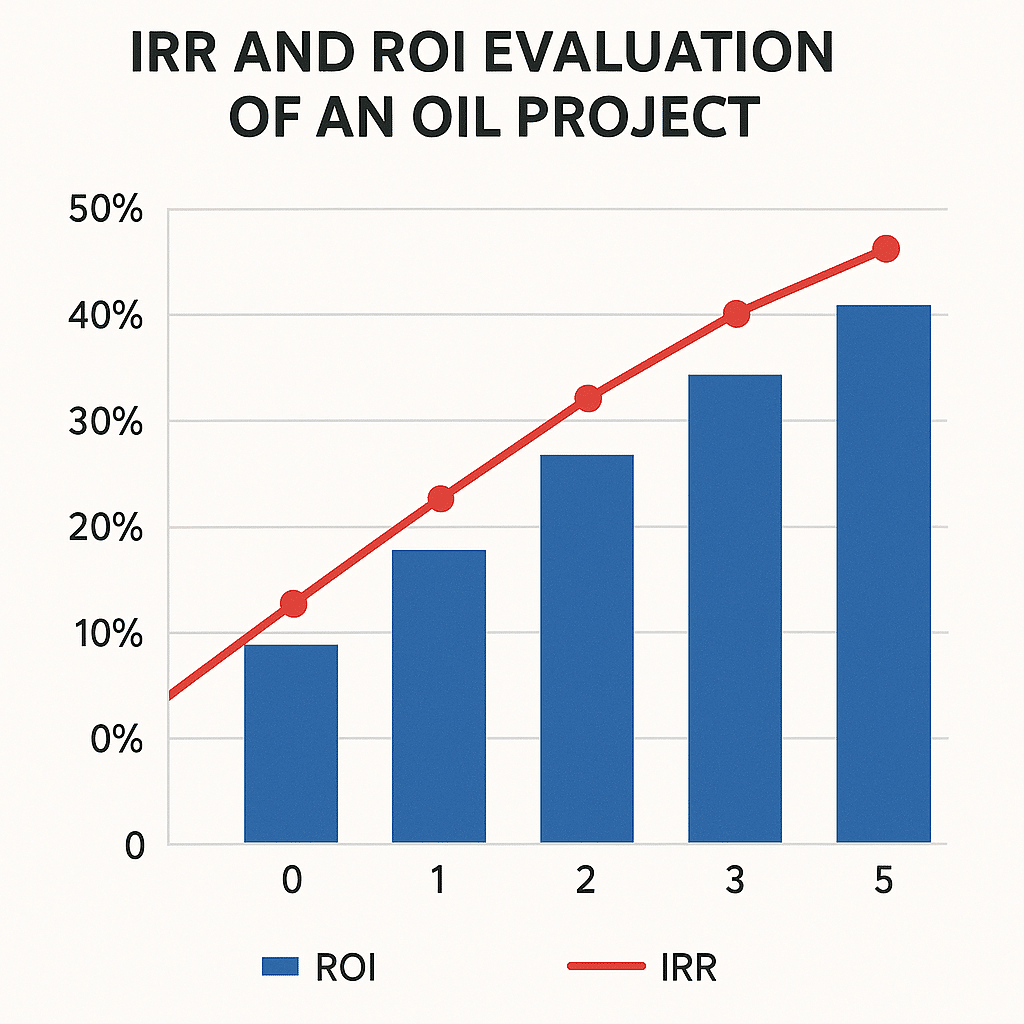
ROI Calculation Framework:
- Baseline establishment: Current performance metrics
- Incremental value calculation
- Implementation costs: Development, infrastructure, change management
- Time to value considerations
- Risk-adjusted returns
Communicating Value to Stakeholders:
- Executive dashboards and KPIs
- Translating technical metrics to business outcomes
- Case study compilation and success stories
Exercise 4.1: Business Case Development (45 min)
Participants develop a business case for an AI project:
- Select an AI use case from provided options
- Estimate potential value using industry benchmarks
- Identify implementation costs and risks
- Calculate ROI and payback period
- Prepare 5-minute executive presentation
Afternoon Session 1: Governance, Ethics & Future Trends
Module 4.4: AI Governance & Ethics (45 min)
Responsible AI in the energy sector:
Governance Framework:
- Model documentation and lineage tracking
- Approval workflows for model deployment
- Audit trails and explainability requirements
- Data privacy and security considerations
Ethical Considerations:
- Bias in training data and model outputs
- Transparency and explainability (XAI)
- Human-in-the-loop requirements
- Environmental impact of AI (compute resources)
- Workforce implications and reskilling
Regulatory Landscape:
- Emerging AI regulations (EU AI Act implications)
- Industry standards (SPE, API)
- Company-specific AI policies
Module 4.5: Future Trends & Emerging Technologies (45 min)
The evolving AI landscape for reservoir engineering:
Large Language Models (LLMs):
- Natural language interfaces for data querying
- Automated report generation
- Knowledge extraction from technical documents
- Copilot assistants for geoscientists
Foundation Models:
- Pre-trained models for geoscience (seismic, well logs)
- Transfer learning at scale
- Multi-modal models combining text, images, time-series
Quantum Computing:
- Potential impact on reservoir simulation
- Optimization problems suited for quantum
- Timeline and practical considerations
Edge AI and IoT:
- On-device inference at wellsites
- Reduced latency for real-time control
- Privacy-preserving distributed learning
Afternoon Session 2: Capstone & Implementation Planning
Case Study 4.1: Major NOC Digital Transformation (30 min)
Comprehensive analysis of a national oil company’s AI journey:
- 5-year transformation roadmap
- Technology stack and vendor selection
- Organizational change management
- Talent development and retention
- Measured outcomes: $500M+ annual value creation
Exercise 4.2: AI Implementation Roadmap (60 min)
Participants create an implementation plan for their organization:
- Assessment: Current state of AI maturity
- Prioritization: Ranking use cases by value and feasibility
- Roadmap: 6-month, 1-year, 3-year milestones
- Resources: Required skills, tools, and budget
- Governance: Oversight structure and risk management
- Success metrics: KPIs and measurement approach
Group Presentations & Feedback (30 min)
Selected teams present their roadmaps for peer feedback.
Course Wrap-up & Next Steps (15 min)
Final session covering:
- Key takeaways from 4 days
- Resources for continued learning
- Community and networking opportunities
- Certification process (if applicable)
- Feedback collection
Day 4 Quiz Topics
The 15-question quiz will cover:
- MLOps lifecycle components
- Model deployment strategies
- Drift detection methods
- System integration patterns
- ROI calculation framework
- Value driver identification
- AI governance principles
- Explainability techniques (SHAP, LIME)
- LLM applications in upstream
- Implementation roadmap components
